SmileScore: Clinical MVP
65+ clinical data points on paper. Turned into a product a practitioner could use mid-exam.
A scoring methodology run manually with pen, paper, and mental maths. The challenge was making it work on an iPhone, one-handed, chair-side during a 60-minute appointment.
Context
A client in the oral health space had developed a comprehensive scoring methodology, 65+ data points across 8 assessment sections, run manually with pen, paper, and mental maths. Before building anything, I wrote a product strategy and defined validation criteria with the client: does the scoring work clinically, does it fit a 60-minute appointment, do patients understand the output?
Design Decisions
The practitioner uses this on an iPhone, one-handed, chair-side during a 60-minute appointment. That constraint shaped everything:
- Mobile-first, touch-optimised: every interaction works with one hand.
- 8-section exam flow: matches the natural sequence of an exam, no jumping between screens.
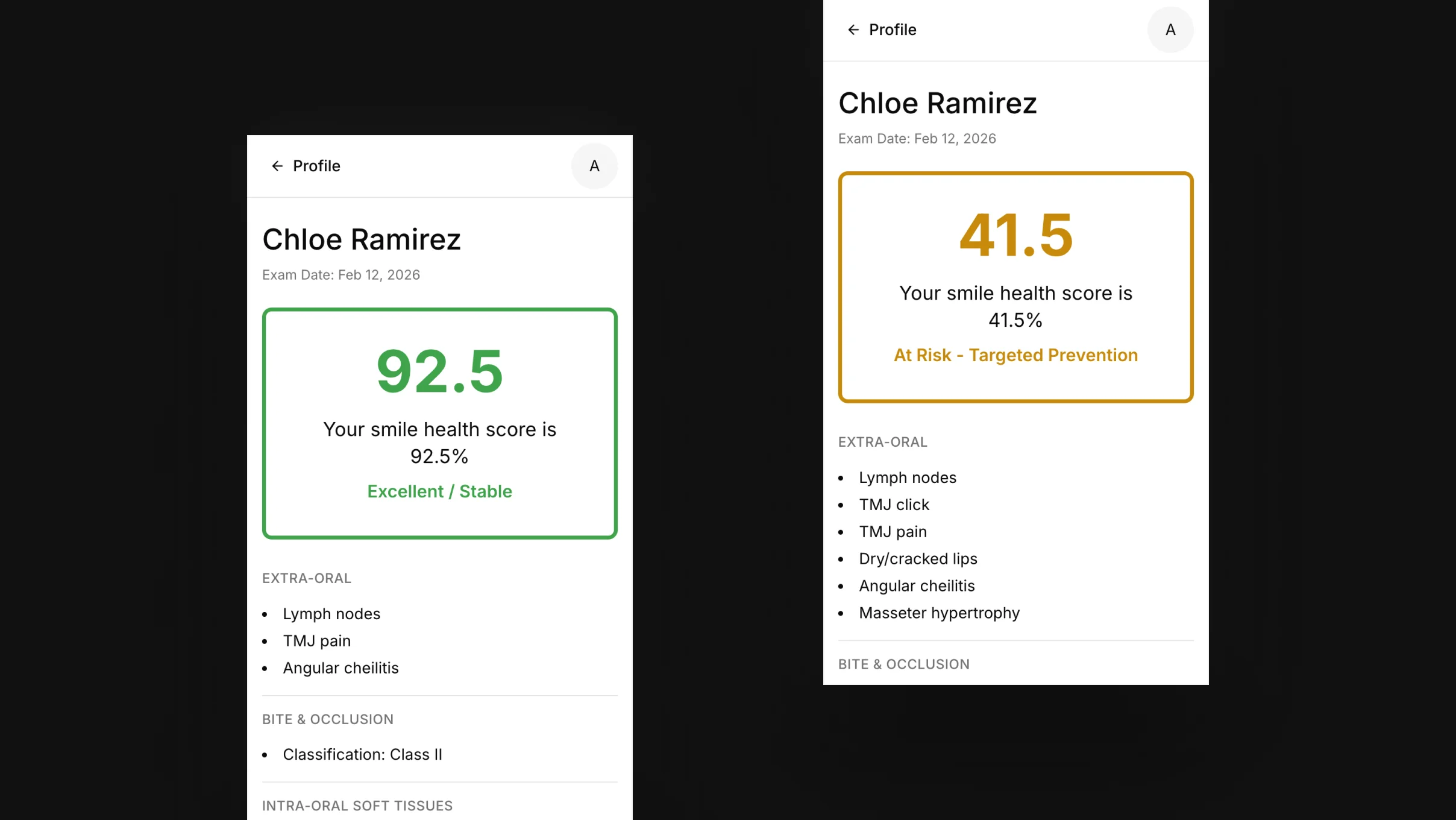
- Score as centrepiece: single 0-100 result with traffic-light visualisation. Complex data in, clear feedback out.
- Deduction model: start at 100, lose points per finding. Patients see exactly what’s affecting their score.
- Scoped for validation: no tooth charting, no multi-clinician features, no patient app. Prove the core experience first.
Mid-build, clinical feedback showed the original tooth-by-tooth input was too slow chair-side.
I adapted the flow based on the client’s simpler approach rather than defending my first design.
The Build
~50 hours from first meeting to live. I mapped the product logic and screens first. Then used AI to build within that structure. Next.js, Supabase, TypeScript, deployed on Vercel.
Now being tested in a real clinical setting and capturing feedback for the next phase.